
We tend to look back on sixteenth-century royalty through the lens of court intrigue and strategic marriages, yet history is often shaped by moments where personal challenge meets ideology. Few episodes illustrate this better than the violent origin of Scotland’s most infamous witch hunts.
In August 1589, fourteen-year-old Princess Anna of Denmark married King James VI of Scotland by proxy. Soon after, she set sail on the perilous voyage across the North Sea to meet her new husband. What should have been a triumphant royal arrival descended into a maritime nightmare. Violent autumn storms battered the Danish fleet, forcing the ships to seek refuge along the rocky coast of Norway.
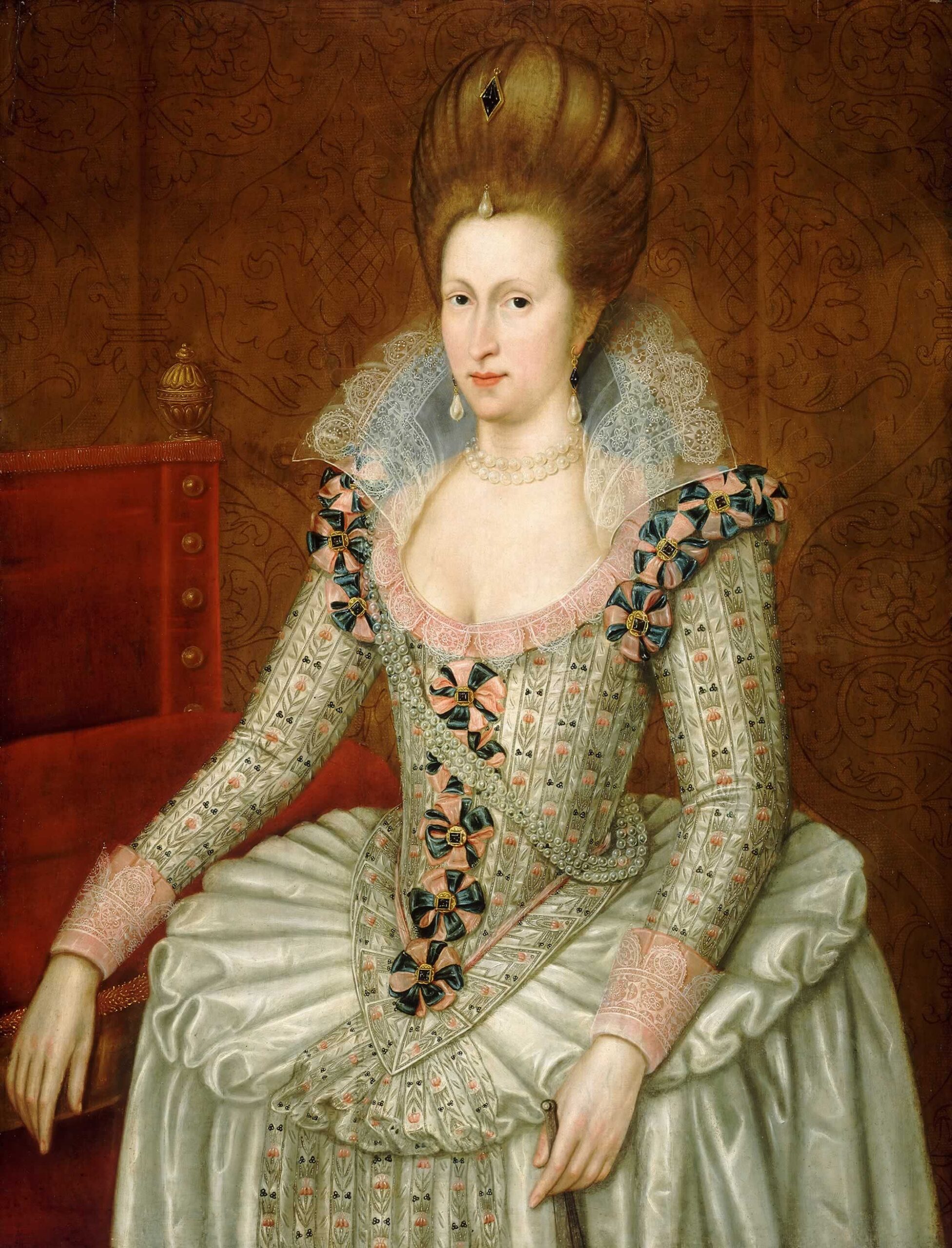
Anna of Denmark, attributed to John de Critz the Elder (Wikimedia Commons)
In Edinburgh, King James decided not to wait for the weather to improve. The twenty-three-year-old king took the brave (reckless and romantic) decision to cross the perilous seas himself to retrieve his bride.
James landed in Norway and spent the winter celebrating in Copenhagen, yet the experience seems to have left an indelible mark on him. We have to ask why this well-educated, intellectual king became convinced that the tempest at sea was not mere bad weather, but the result of demonic spells.
The Danish Influence and Political Scapegoating
The catalyst for James’s obsession began in Denmark. When the Danish royal fleet failed to deliver Princess Anna to Scotland, the Danish Finance Minister, Christoffer Valkendorff, was blamed by Admiral Peder Munk for poorly equipping the royal ships. Probably to deflect blame from his own failure, Valkendorff instigated a witch hunt. He claimed local women, most notably Karen the Weaver, summoned demons to whip up the sea.
I could not find any evidence of what Queen Anna thought of this, but there was a Danish tradition of blaming witches for storms at sea, and earlier cases attributed naval disasters to malign interference. King James therefore reflected Danish popular culture in which supernatural explanations for catastrophic weather were conceivable.
A crucial figure was Ane Koldings, wife of a Danish official with whom Admiral Peder Munk had quarrelled. She was already imprisoned on a witchcraft charge when Danish officials questioned her about the failure of the royal fleet.
Under torture, Ane Koldings confessed that witches raised the storms threatening Anna’s ship. According to her confession, witches sent devils to climb the ship’s keel and cause the storm. Ane Koldings implicated a dozen other women, triggering a chain of further arrests and trials.
Ane Koldings was burned as a witch in 1590, and other unfortunate women followed. This became an important story because it transformed near maritime disaster into a supernatural conspiracy.
During his stay in Denmark, King James became absorbed by these Danish witch trials, and debated demonology with Danish theologians. For a young king already steeped in intense Protestantism, the explanation fitted his worldview.
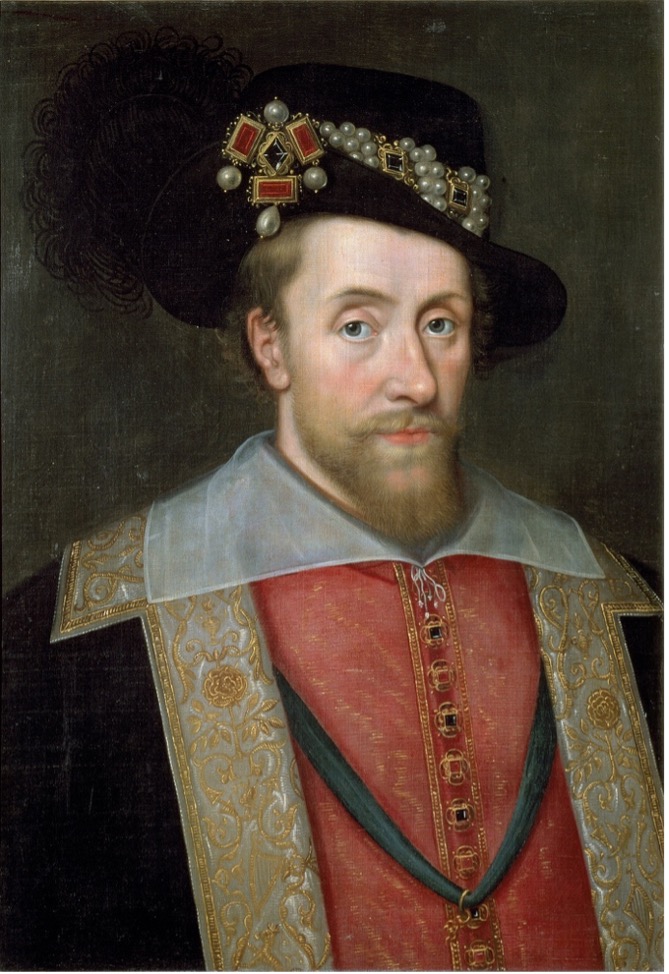
King James, after John de Critz, c. 1605 (Wikimedia Commons)
The Divine Right of Kings
To understand James’s reaction, one must understand his belief in the divine right of kings, a conviction that monarchs were appointed by God to rule. In King James’s mind, he was God’s anointed lieutenant on Earth, and Satan’s primary adversary.
When James and Anne returned to Scotland in May 1590 after yet another stormy crossing, the Scottish authorities launched the North Berwick witch trials. Under torture, suspects including Agnes Sampson and Geillis Duncan confessed to bizarre rituals, including tying dead cats to severed human limbs and casting them into the sea to raise a tempest specifically intended to drown the king and his young queen.
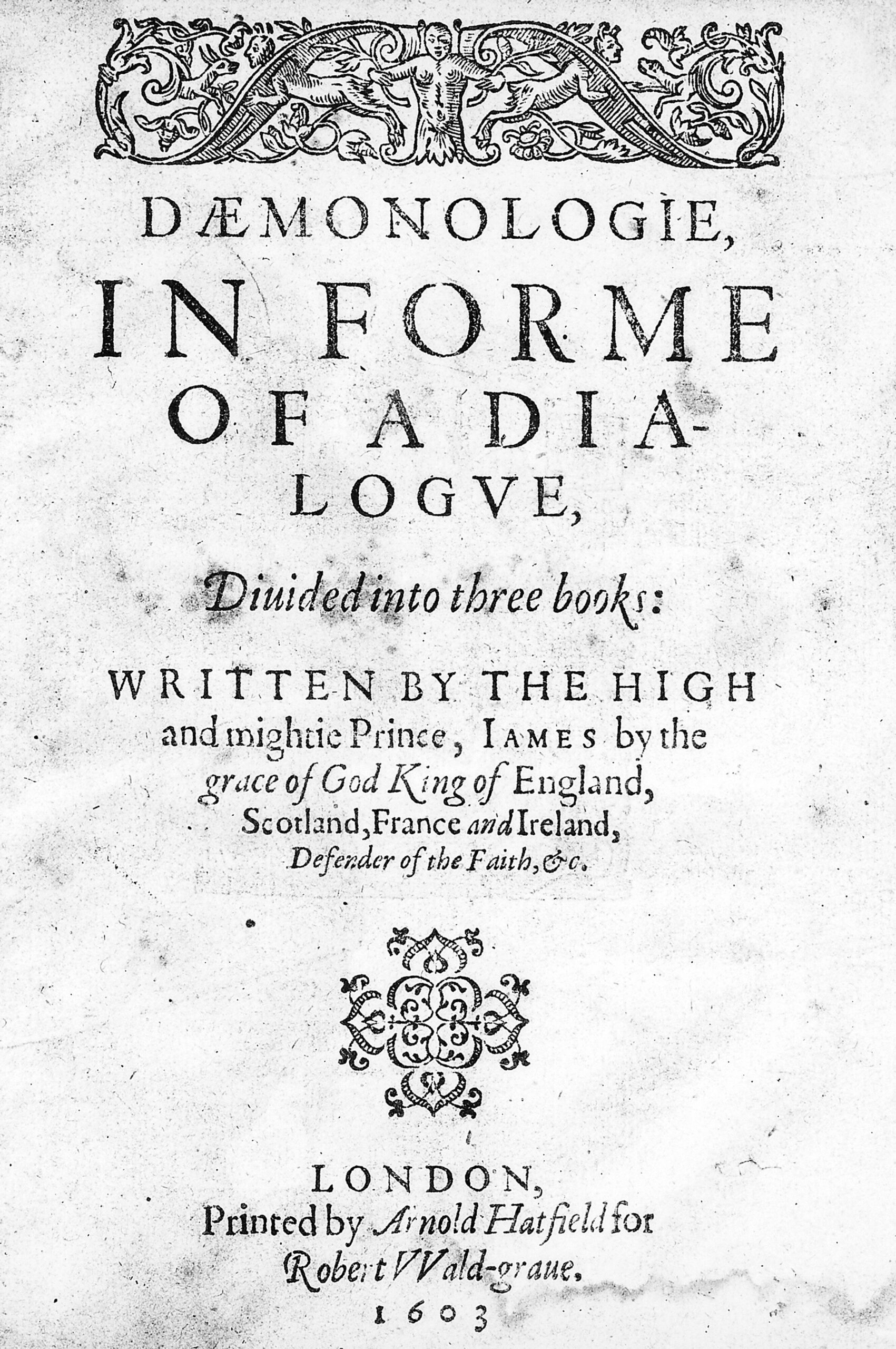
For James, these confessions confirmed his worst fears. The Devil was actively waging war against his throne. His personal involvement in interrogating the accused inspired his 1597 treatise, Daemonologie. Seven years after the North Berwick trials, King James published Daemonologie in Edinburgh, setting off decades of catastrophic witch prosecutions across Scotland and England.
Further Reading
If you would like to read more about the story of Anna of Denmark, and how she became Queen Consort of England, Scotland and Ireland, you might enjoy my new novel Queen Anna (Book One of the Stuart Queens trilogy), see https://mybook.to/QueenAnna
I also recommend:
Witches: A King’s Obsession, (Birlinn Ltd, 2025) by Veerapen, Steven. Tracing witches, witchcraft, and witch-hunters from the explosion of mass trials under King James VI and I in the late sixteenth century to the demise of the witch-hunting phenomenon in the early eighteenth century.
Witches of the North: Scotland and Finnmark (Brill, 2013), by Willumsen, Liv Helene. A comparative study of witchcraft persecution in Scotland and Finnmark, Norway. A wide range of quantitative and qualitative analyses based mainly on legal documents which shed light on the witch-hunts in the two regions during the seventeenth century
Witchcraft in Early Modern Scotland: James VI’s Demonology and the North Berwick Witches, Exeter Studies in History, (Liverpool University Press, 2000) Lawrence Normand and Gareth Roberts. A detailed study of one of the best known and most notorious episodes of Scottish history, the North Berwick witch hunt, in which King James was involved as alleged victim, interrogator, judge and demonologist.
Author Biography:
 Tony Riches is a UK author of historical fiction. He lives with his wife in Pembrokeshire, West Wales and is a specialist in the lives of the early Tudors. As well as his Elizabethan series, Tony’s historical fiction novels include the best-selling Tudor trilogy and his Elizabethan series. For more information about Tony’s books please visit his website www.tonyriches.com
