
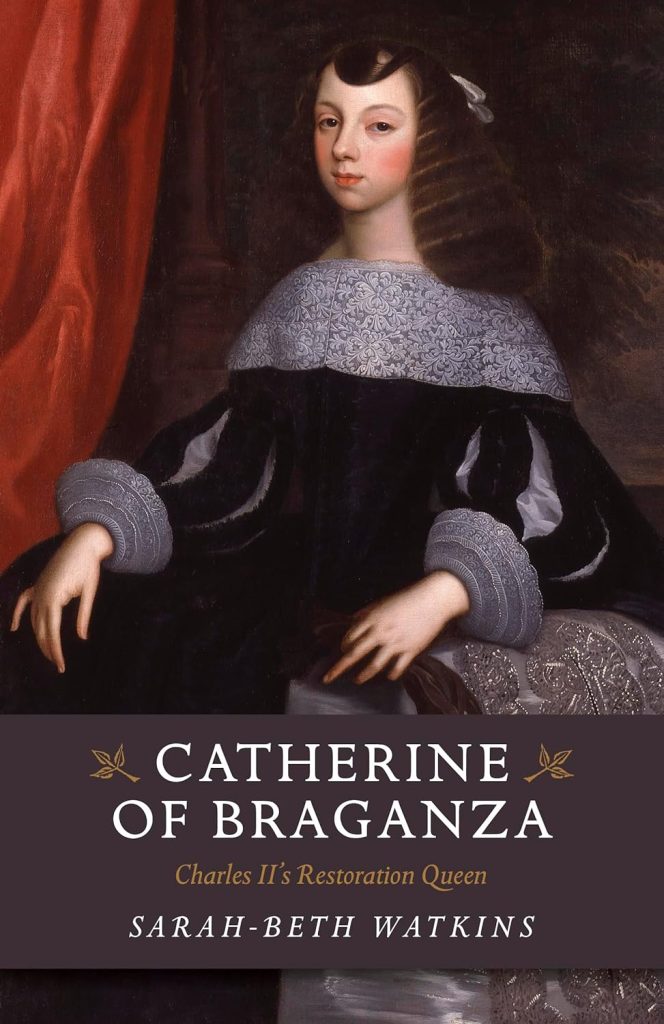
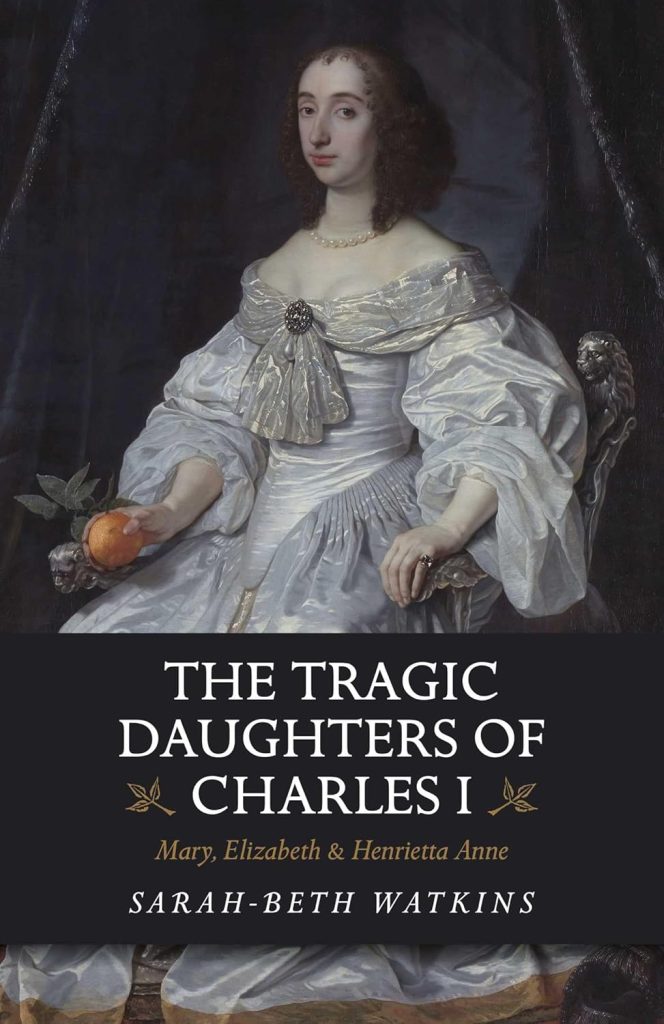
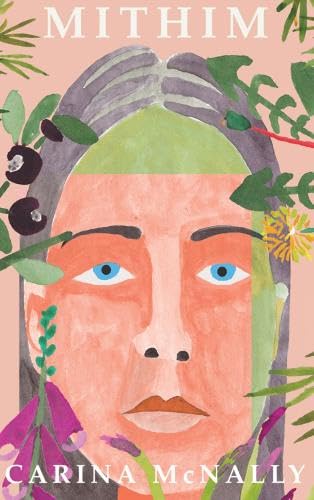
Among various writing ventures, the catapult that led to writing the novel Mithim was undoubtedly my time reviewing for historical non-fiction publisher Chronos Books. As a lover of history, reviewing titles for this Collective Ink Books imprint was a perfect fit. I reviewed many of their 17th-century titles; Catherine of Braganza, Charles II’s Restoration queen and The Tragic Daughters of Charles 1st both by Sarah-Beth Watkins spring to mind, and The Caribbean Irish: How the Slave Myth was made by Miki Garcia.
In Catherine of Braganza, the Portuguese princess marries the merry monarch Charles II in 1662. Reading, we realise that her life was not so merry after all – living through times of war, plague and fire, putting up with the king’s many mistresses and continuous plots to remove her from the throne.
Historical narrative often focusing on kings, The Tragic Daughters of Charles I in particular restores the female experience to the centre of 17th-century history, examining the realities of noble women trapped in the loneliness of dynastic politics, having to endure exile, imprisonment, political uncertainty, and arranged marriages, rendering them mere bargaining tools for international alliances.
Miki Garcia’s The Caribbean Irish: How the Slave Myth was Made was particularly interesting, revealing the global dimensions of 17th-century Irish history, shaped by empire, forced migration, and Atlantic trade. Irish indentured servants, merchants, sailors, and plantation owners, all became part of a growing colonial world stretching from Ireland to Barbados, Jamaica, and Montserrat. This material was especially important because it was the seed which introduced moral complexity into my novel, the Irish being victims of colonial oppression but in the French-owned Caribbean, when given the opportunity, participated within imperial systems themselves, some dispossessed Irish families becoming wealthy planters and slave owners while the majority died in servitude.
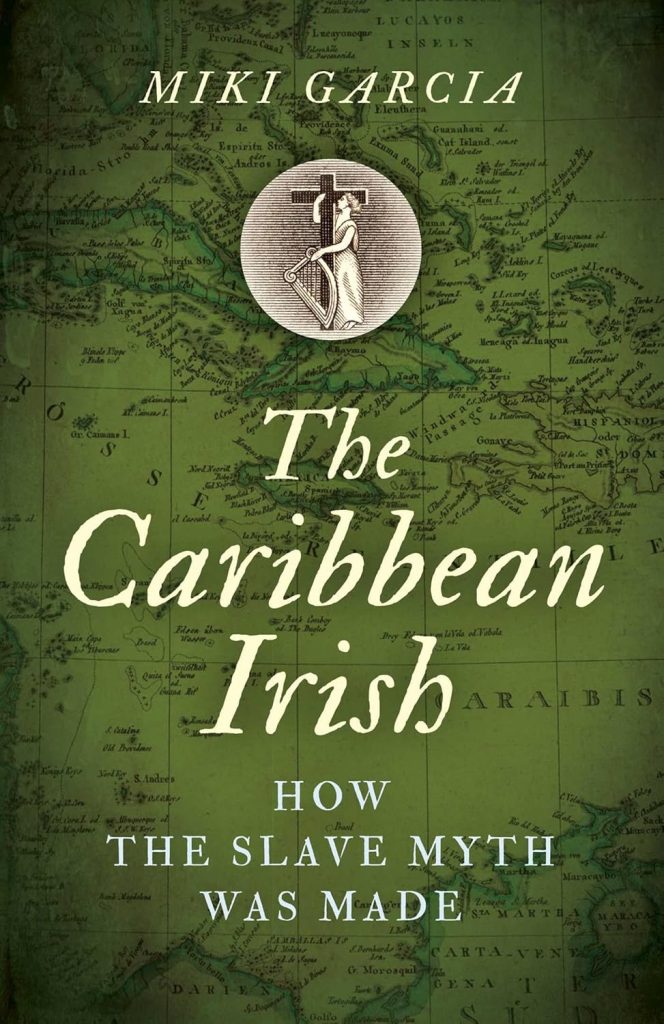
The book reveals the brutality of Cromwellian conquest, transportation policies, and plantation labour; how ordinary people were uprooted by forces beyond their control. Exile, displacement and reinvention, a central theme in my novel.

Not a Chronos title, but reviewing Gerard Fitzgibbon’s Kingdom Overthrown: Ireland and the Battle for Europe 1688–1691 for the Irish Examiner also profoundly broadened my understanding of the 1600s, revealing it as an era of international conflict, sectarian violence, and colonial ambition. Through accounts of the Williamite-Jacobite wars in Ireland, one witnesses how Catholic and Protestant divisions were not theological disagreements at all, but a means to determine land ownership, political rights, loyalty, and often life itself. To a budding novelist, the story created a rich framework for writing about conflict. Accounts of the battles of the Boyne, Aughrim, and Limerick reveal not heroic romantic warfare but exhaustion, famine, mud, terror, and brutality. Fitzgibbon’s descriptions of soldiers dying slowly from musket wounds, starvation spreading after scorched-earth campaigns, and divided leadership among the Jacobites all help strip away modern romanticism about war which I strive to bring to the novel.
Recurring truths about the 17th century kept popping up. Reputation could destroy lives. Religion shaped identity and loyalty. War was brutal and constant. Empire displaced entire populations. Survival depended on adaptability. People feared God, plague, famine, and political betrayal. Honour mattered. Bloodlines mattered. Religious identity mattered. Death was common and often sudden.
Having been provided with the building blocks of a believable historical world, dynastic ambition, war, exile, colonial expansion, and survival inside brutally unstable political systems, slowly my novel started taking shape. The sensory details contained within works I’d read were equally valuable to help me write about the texture of daily life… velvet gowns, sweat beneath brocade, banquets, candle wax.
I have long been fascinated by the stories of women whose lives and achievements have too often been overlooked. When Sarah-Beth Watkins of Chronos Books approached me to write a new angle on the story of Gráinne Mhaol Pirate Queen of Ireland, I seriously considered it, sitting at a table, thinking about how I could reframe her story, going through the mid and late 1500s year by year and the events that framed her life. I wanted to witness what she witnessed in her lifetime: the end of the medieval period, laws against Irish customs, laws and dress, the Reformation, the destruction of the monasteries as decreed by Henry VIII, and martial law. One day, compiling my 1500s year diary, I thought – hold on – a lot has been written about Gráinne Mhaol already. What about all the other Irish women that history forgot? What happened to all these women when their men were butchered out of existence under martial law? Suddenly the character of Mithim came to me, but oddly enough she did not appear in the time of Gráinne Mhaol, instead almost 100 years later in the mid 1650s, a period I’d been reading about.
What had drawn me to Chronos in the first place was their strong focus on women’s history, the imprint deeply committed to exploring history through a “herstory” lens. Many of the women I had read about – as in Sarah-Beth Watkins The Tragic Daughters of Charles 1st – shockingly never even made it to the age of 30. From birth, they faced uncertain futures due to the complexity of political upheaval at the time of their untimely birth. Mithim came to me as just this, a young woman, uncertain of her life and future. So I stepped up to the mark and gave her both.
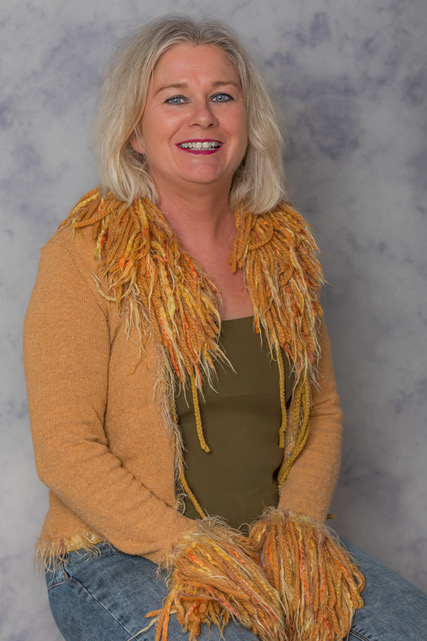
Carina McNally is a freelance journalist, playwright, historian and tour guide based on the Beara Peninsula, Co. Cork, Ireland. Her short stories have appeared in Cyphers Literary Magazine and Woman’s Way. Mithim is her debut historical novel.
You can read The Seventeenth Century Lady’s review here, and for more information on Mithim, visit the publisher at: https://www.mercierpress.ie/books/mithim/

Good article.
Thank you, Charles!