
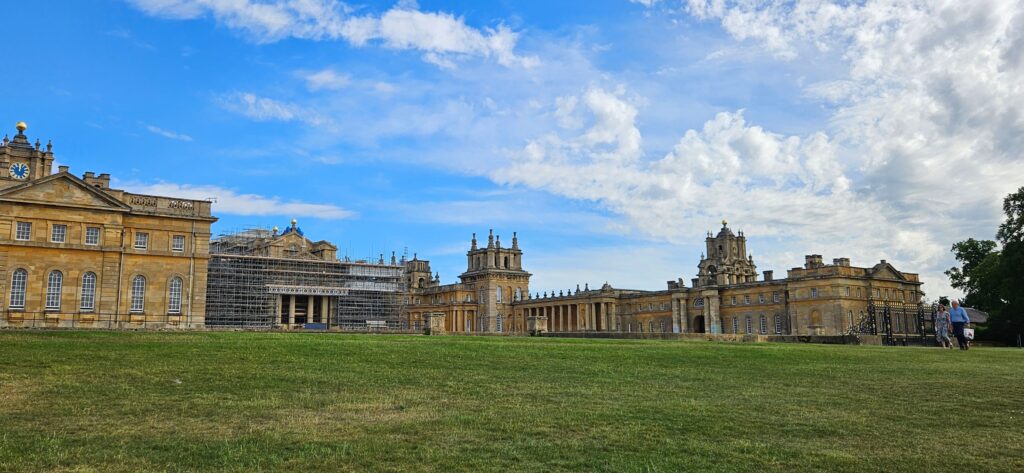
My husband surprised me with a trip to Blenheim Palace last Saturday, May 30th 2026. Now, for those of you who are new to this blog, it is a very special place for me. I hadn’t been to Blenheim since 2023, and the iconic front of the building is currently heavily scaffolded, which is likely necessary, but there were still some disappointed tourists.
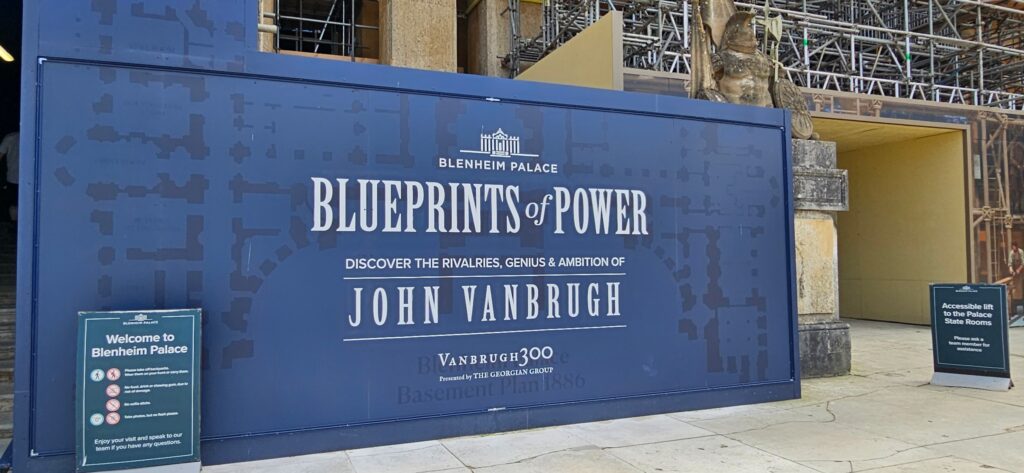
Vanbrugh 300 The Blueprints of Power Exhibition from Saturday, 14th February 2026- 31 May 2026, is part of Vanbrugh 300, commemorating the life of the incredible Sir John Vanbrugh (1664-1726), who was not only a brilliant architect, but a playwright of notable Restoration works, ‘The Relapse’ from 1696 and ‘The Provoked Wife’ from 1697. Vanbrugh 300 is being recognised by several historic venues, including Blenheim Palace, Castle Howard, Grimsthorpe Castle, Kimbolton Castle, Seaton Delaval Hall, and Stowe Hall.
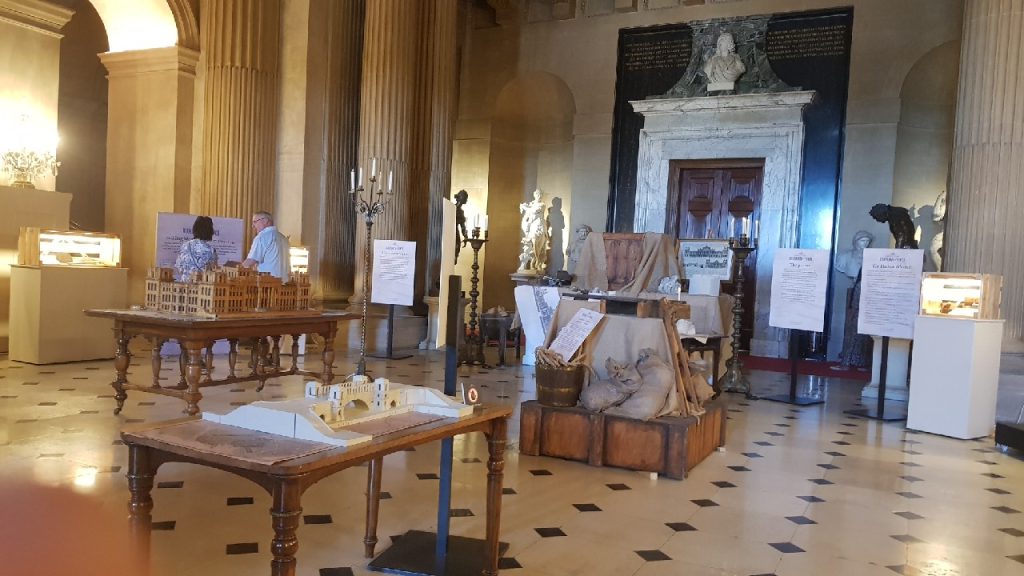
The Great Hall is currently being worked on, so the ceiling is not visible due to scaffolding, but they have added a fake copy of that ceiling, so it still looks good.
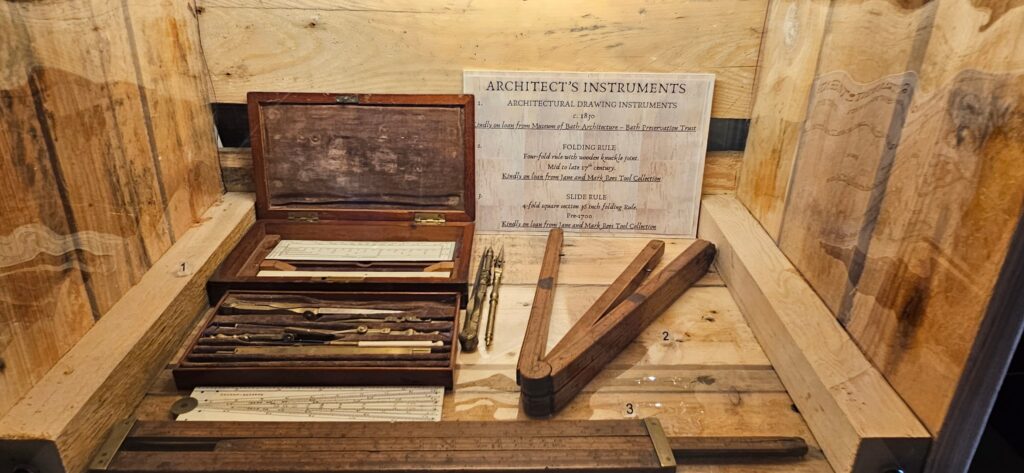
This room had lots of information about the making of Blenheim and displays of the kinds of tools which were used, including this mid-to-late-17th-century folding rule:
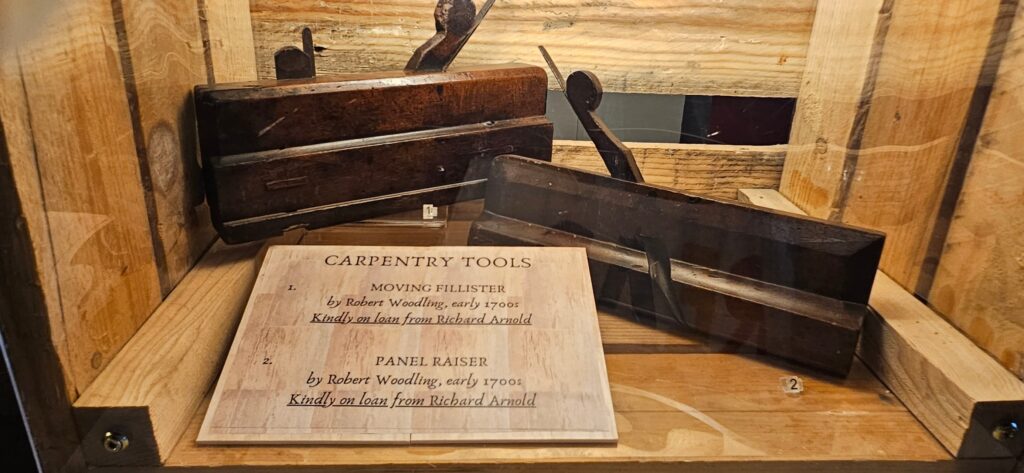
 …and this moving fillister and panel raiser from the 1700s:
It was nice to see these portraits of John Churchill, 1st Duke of Marlborough, and his family, although Sarah Churchill takes more of a dominant position in this than her husband, who is on the left. He’s also in that fine martial portrait just above the family painting:
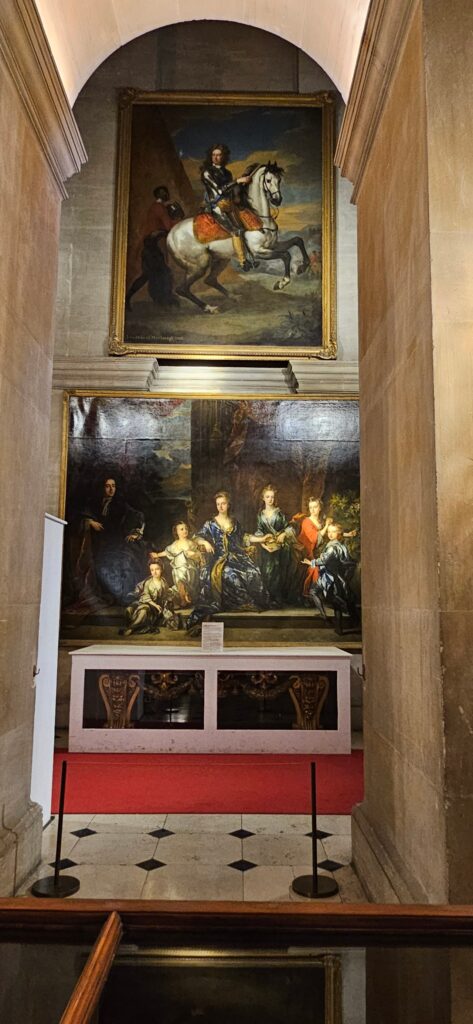
John and Sarah Churchill, 1st Duke and Duchess of Marlborough, were both rather poor gentry who rose up gradually until they became the most powerful couple in the Late Stuart period. John was a page in the household of James, Duke of York (later James II and VII). His cousin, Barbara Villiers (whose biography I wrote), was his lover, and he likely was the father of her youngest daughter, also named Barbara. John married Sarah Jennings in 1677.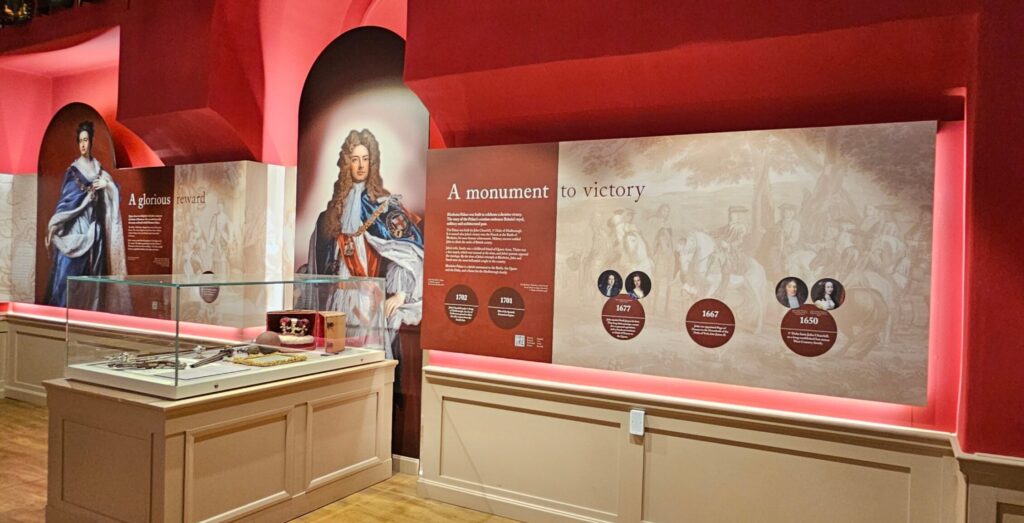
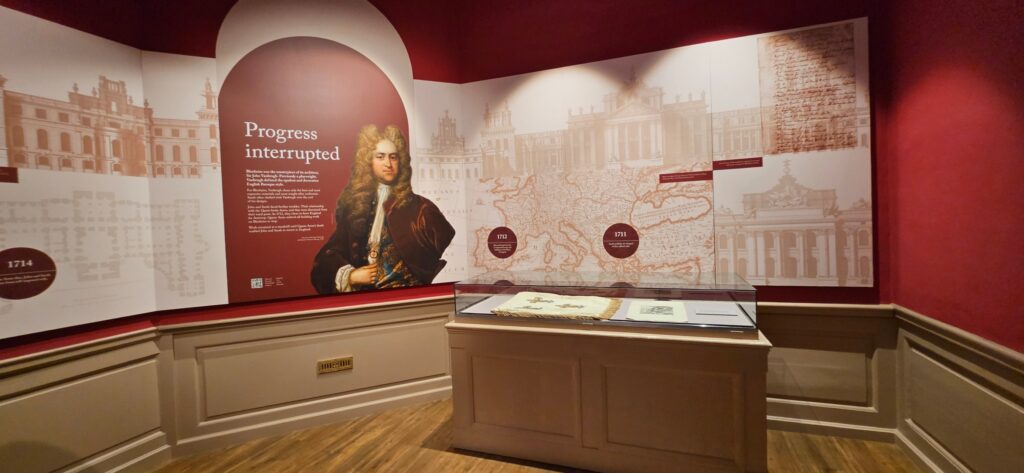
Following a walk from the Great Hall down a corridor containing stunning busts (including that of Consuelo, whose Facebook page I run), visitors entered a room with a timeline and images of the main figures associated with the palace’s history, particularly the Churchill family. I thought this, along with the artefacts inside the glass display, was a very good addition, bringing further context to the exhibition.
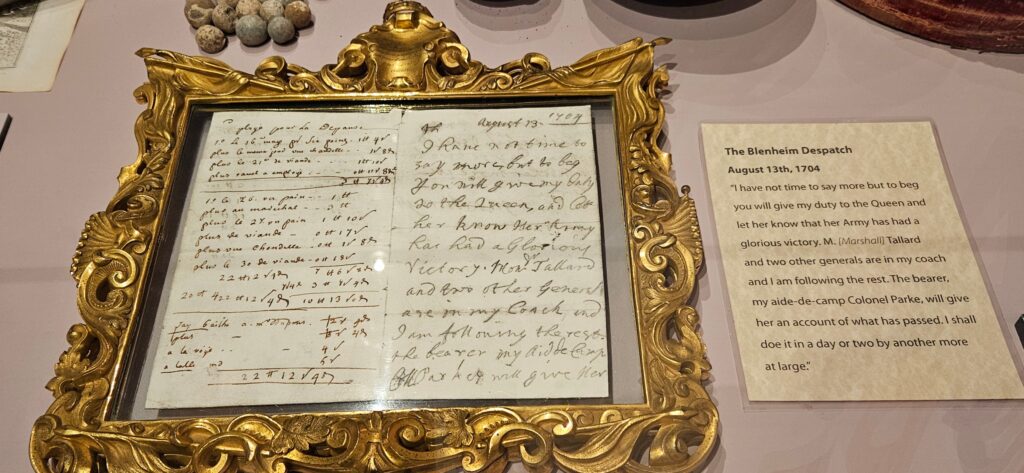
Inside the display in this room was some information about the Battle of Blenheim (1704) – it was Churchill’s military victory in this battle that resulted in his being gifted the estate on which Blenheim Palace would be built: in Woodstock, Oxfordshire, England. Charles Spencer wrote a fantastic book about the battle, and you can see my review here. Here is a copy of the famous Blenheim Dispatch:
And this is a crown made for Queen Anne:
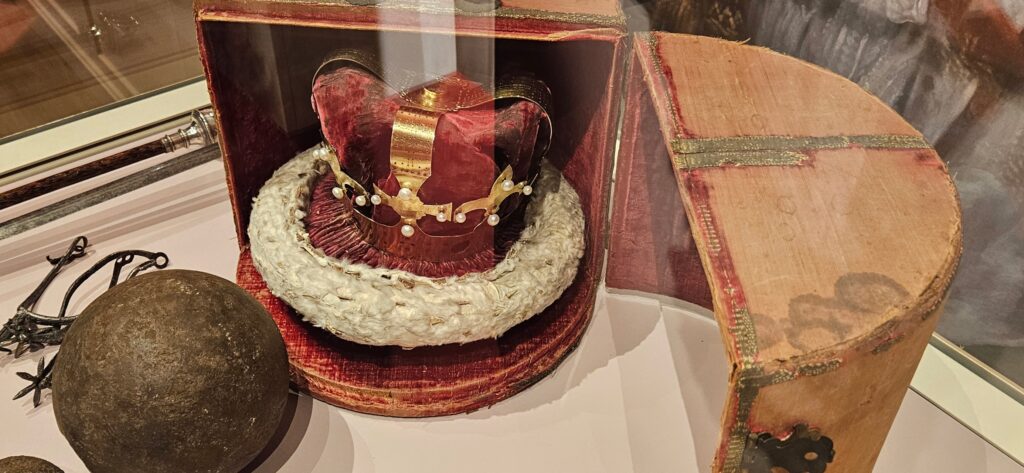
Also on display were flintlock pistols made for the 1st Duke of Marlborough, a French officer’s sword, and other items.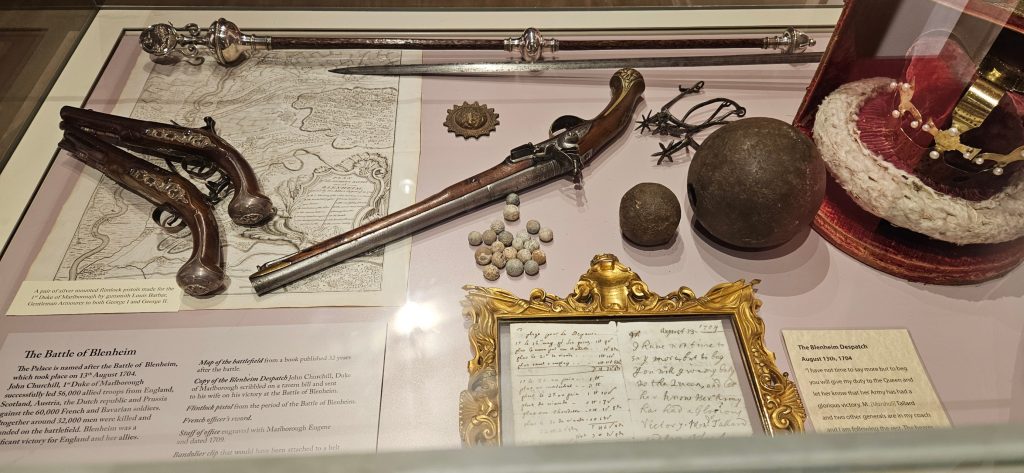
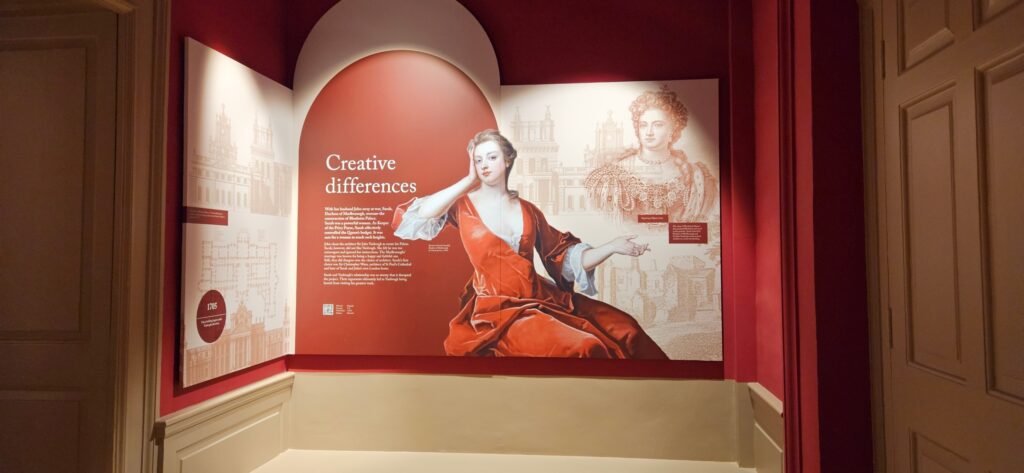
Queen Anne’s relationship with Sarah Churchill went back decades, as the two were children growing up together and Sarah – bold, imperious, beautiful – took the shy and often-overlooked Stuart princess under her wing. Anne was, after all, somewhat overshadowed by her elder sister, Mary. Sarah and Anne’s friendship was strong, but Sarah could be domineering and mean to Anne – something which eventually led to the rupture of their friendship and the Marlboroughs’ fall from power. You can learn more about this in Chapter 27 of my 2020 book, Sex and Sexuality in Stuart Britain.
 The next rooms focused on the increasingly difficult relationship between Vanbrugh and Sarah, Duchess of Marlborough: they constantly bickered about the extravagant sums of money Vanbrugh was spending on the construction of the palace.
Next were the private family rooms, which I’d never visited before and they were lovely, but no photography was permitted in these, but there were many displays, including one of the notorious Kit-Cat Club, of which Vanbrugh was a member. The State Rooms were next, and these are the rooms most visitors would have seen before. Under the late Duke, I remember that no photography was permitted, but under the present Duke, visitors are now allowed to take photos – so I did!
I’m a sucker for a good costumed interpretation at these things, and there were several actors dressed in period clothing, which gave the exhibition a really nice touch.
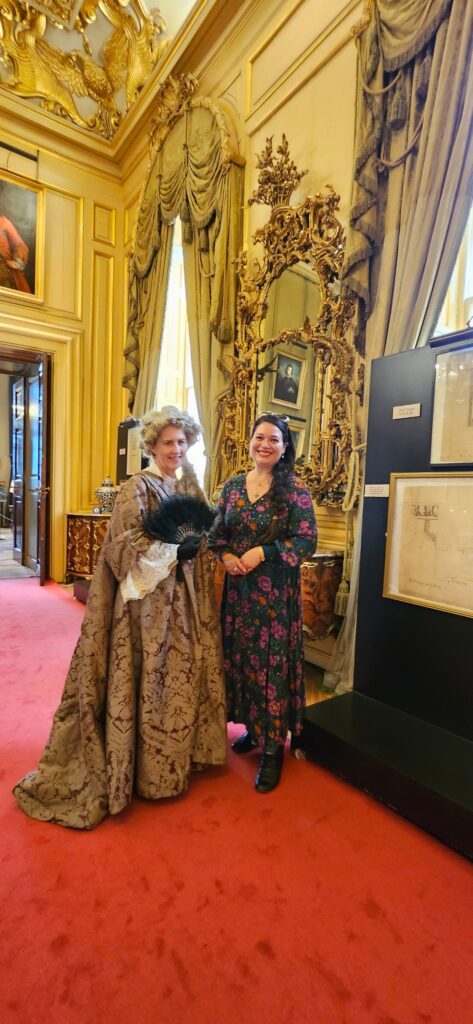
This costumed lady did ever so well as it was a very hot day!
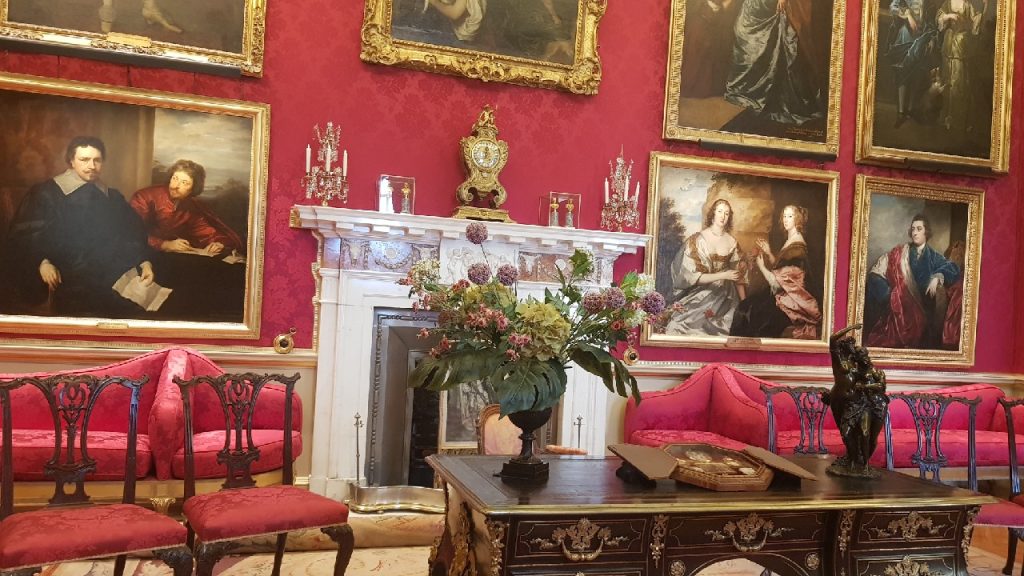
There is a wonderful collection of seventeenth-century artwork at Blenheim, and there is one spot in which ‘selfies’ were encouraged, so I did so – see if you recognise the folks in the portraits on the wall behind me!
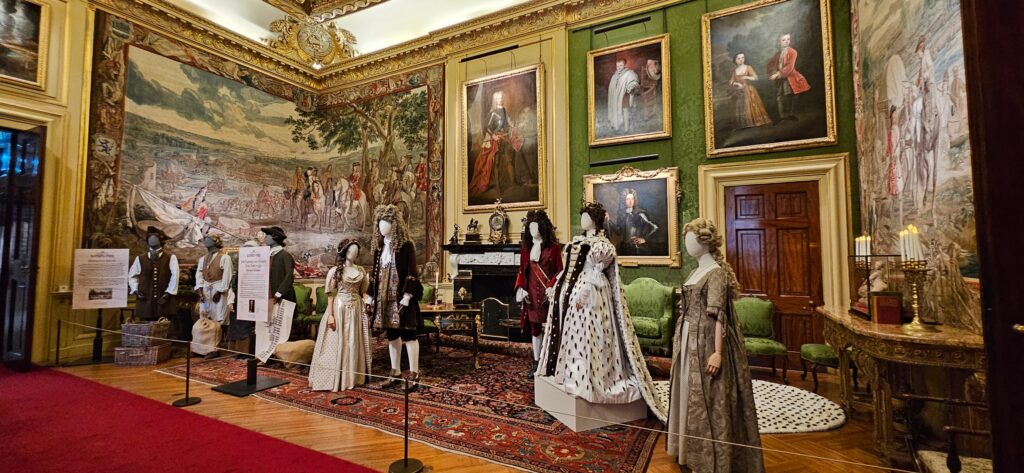
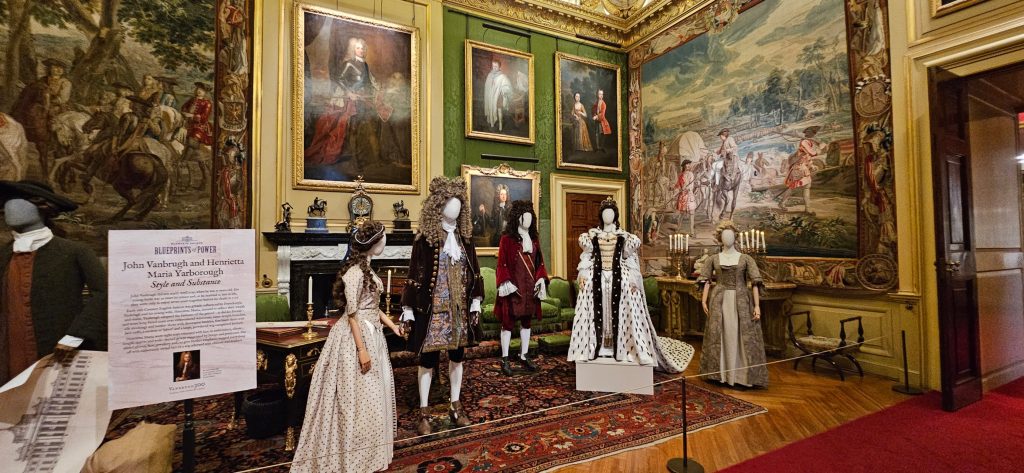
One of the final rooms contained costumes from the 2018 film, The Favourite, a highly fictionalised view of Queen Anne’s relationships with favourites Sarah Churchill and Abigail Masham. Whilst I’m not overly keen on the film, the costumes are very good and those in this exhibition were nice to see, especially since I’d previously seen them some years ago at an exhibition at Hampton Court Palace.
 This room had information about Vanbrugh’s later life and his marriage to the much-younger Maria Yarborough – a union that appears to have been happy. This couple were together only seven years until Vanbrugh died in 1726 at the age of 62.
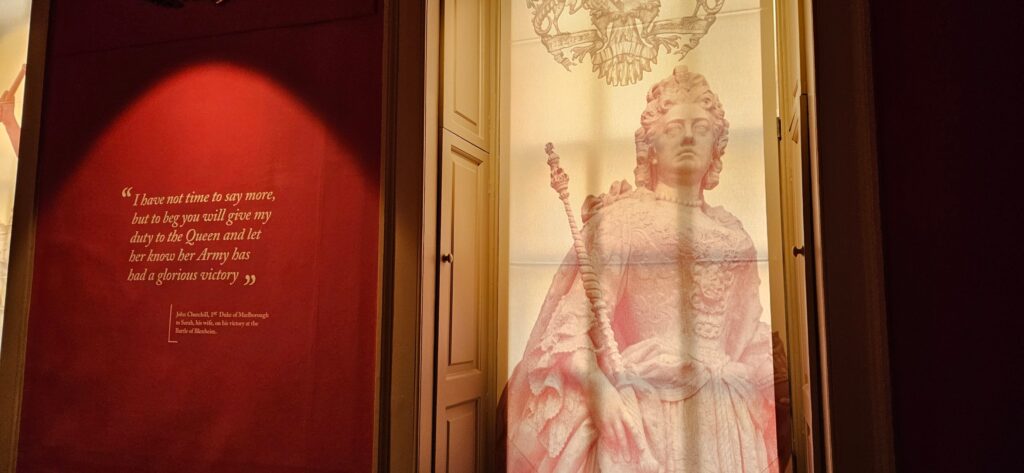
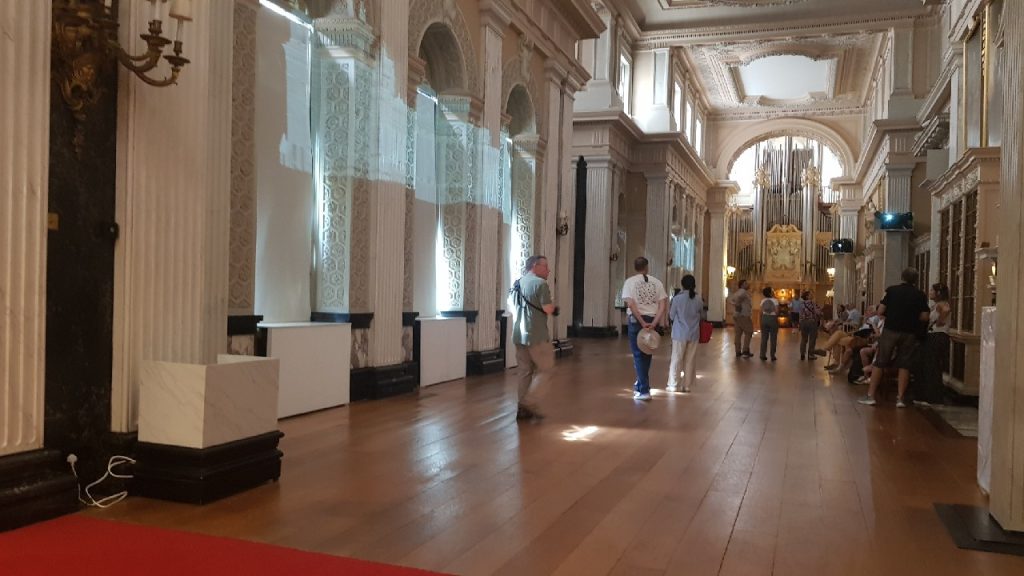
 The exhibition ended with computerised screens showing two portraits: Sarah and Vanbrugh, arguing over the cost of the construction. This addition I wasn’t too sure about, but we then walked into the Palace’s 180-foot-long Library to find the rather flattering marble statue of Queen Anne at Blenheim Palace, which was carved by the Flemish sculptor John Michael Rysbrack in 1735. It’s a stunning work.
I really enjoyed this visit as I think those behind it really understood Vanbrugh’s world and were able to tell his story – and that of this glorious building, which his brilliance was able to create. Blenheim is often described as ‘Britain’s Greatest Palace’ – and I have to agree, it is magnificent!
To learn more about Vanbrugh 300: https://www.vanbrugh300.co.uk/

What lovely photos! The last I was there was in 1986. The place was brilliant and April daffodils were everywhere. I really wish I could have seen this exhibit. Oh, well. On my trip I was also able to see the private residence, saw the threadbare furniture, met the (then) Duchess as she was running out to her car—a mini. She was in real estate I believe. During my time wandering through the palace I saw a set of 1707 playing cards on display and thought “Wow! I’d really like those” only to run into a gorgeous repro-set for sale in the gift shop. PERFECT! The price tag still says “£4.50”. Anyhow, I can’t wait to return, as it is No.01 on our list of things to do outside of London. Evey time I sit down and open an original volume (1719) of Vanburgh’s plays I think of that trip.
Thank you for your delightful comment! Reproduction items are such fun – glad you got a pack of those playing cards!