
Joseph Glanvill was born in 1636 in Plymouth. His family were Puritans and, like the rest of these English reforming Protestants, sought to ‘purify’ the Church of England from its Catholic practices.
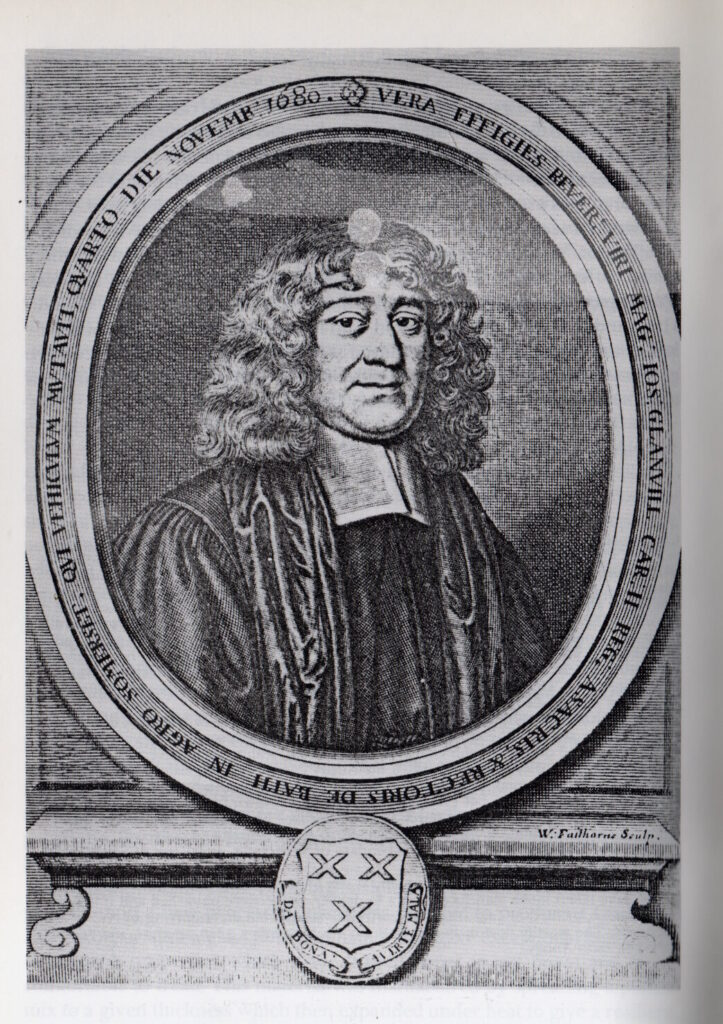
© Author’s collection.
Glanvill attended Exeter College, Oxford, where he studied religion, logic and philosophy, and graduated in 1655. He later obtained an MA from Lincoln College.
By the time Glanvill left his studies, he was already achieving a reputation as a forward thinker, and it wasn’t long before these thoughts found their way into print.
One of his first books was called The Vanity of Dogmatizing and was published in 1661. The main thrust of the book was an attack on scholasticism and religious prosecution, with the author making a plea for religious toleration, as well as upholding scientific method and freedom of thought. These would mark the future man of the cloth’s belief system for the rest of his life.
Through this book, he also gained a Fellowship of the Royal Society. Glanvill was, by all accounts, an intelligent man whose zeal for science was matched only by a need to investigate the paranormal and warn others of its existence.
In 1662, the Uniformity Act – which demanded a return to the Anglican Book of Prayer in services – caused the current vicar of Frome – John Humpfrey – to lose his living and leave St. John’s Church. His successor was Joseph Glanvill, who was by then Chaplain to Sir James Thynne of nearby Longleat (the latter being responsible for appointing the vicars of Frome).
Glanvill took up his position in Frome in October 1662. While in this position, he further researched his belief in the paranormal and gathered together the episodes and incidents that would inform, or be included in, his greatest work – Saducismus Triumphatus.
He was one of the numerous puritans who believed in the supernatural and used the bible as ‘evidence’ to prove the existence of ghosts, demons and witches. Taking it one step further though, men like Glanvill used the line in Exodus 22:18, ‘Thou shalt not suffer a witch to live’, as a divine justification to persecute any person accused of practicing the dark arts.
Most of the incidents and happenings that appear in Glanvill’s book came through conversations with his friend Robert Hunt of Compton Pauncefoot. As well as being the Member of Parliament for Ilchester and a Justice of the Peace, Hunt was a fervent investigator of the paranormal and as a JP, had heard of many relevant cases.
These included Jane Brooks who, in 1657, had been accused of witchcraft against a twelve-year-old boy called Richard Jones. After many episodes in which the victim suffered the inability to speak, pains in his side, and ‘visions’, while having ‘fits’, in which he saw Brooks in front of him with a knife, the accused was brought to trial, found guilty, and duly executed.
Another case was that of Elizabeth Style, seven years later. As Andrew Pickering suggests, in his book ‘The Hellish Knot’, regarding this later case: ‘Elizabeth Style’s case has many of the hallmarks of the classic English witch trial. She was accused by her neighbours of causing inexplicable sicknesses in her community.’
Possibly the most famous case recorded in Joseph Glanvill’s book is that of the witches of Brewham, in Somerset. This civil parish consisted of two small villages – North and South – located east of Bruton and about nine miles south-west of Frome. Glanvill’s account, again taken from testimonies given to Robert Hunt, detail the various misdeeds of several women and their victims, some of whom – participants and victims – were related to one another.
This coven of ‘witches’, as described by Glanvill, included Christine and Catherine Green – sisters-in-law – Margaret Agar and Mary Warberton. These women, along with others, would meet in a nearby forest and while there, converse with the devil (or at least a man in black).
Various ill-fortune or deaths would then befall members of the local community, considered to be the work of spells and other incantations practised by the said women. The fate which befell the ‘Brewham’ witches, however, has been lost in time, apart from a gaol sentence handed out to Margaret Ajar, which, given her role in many of the effigy rituals, seems to be surprisingly light.
Saducismus Triumphatus was published in 1666 and, in this same year, Glanvill left Frome for Bath, where he had accepted a position at Bath Abbey. The city would become his home for the rest of his life, although he retained the living of Frome until 1672, before exchanging it for that of Street. At the same time, he became the Chaplain to Charles II, seemingly shedding his previous puritanism. Joseph Glanvill died in November 1680, aged 44 years old, and was buried in Bath Abbey.
It would not be an overstatement to say Joseph Glanvill’s Saducismus Triumphatus has become one of the most influential books on witchcraft ever written and its influence was immense; including the use of it as justification for a certain series of trials in seventeenth-century New England. This was the infamous Salem Witch Trials, where twenty people were executed; fourteen of whom were women and all, but one, by hanging. Five others (including two infant children) died in prison.
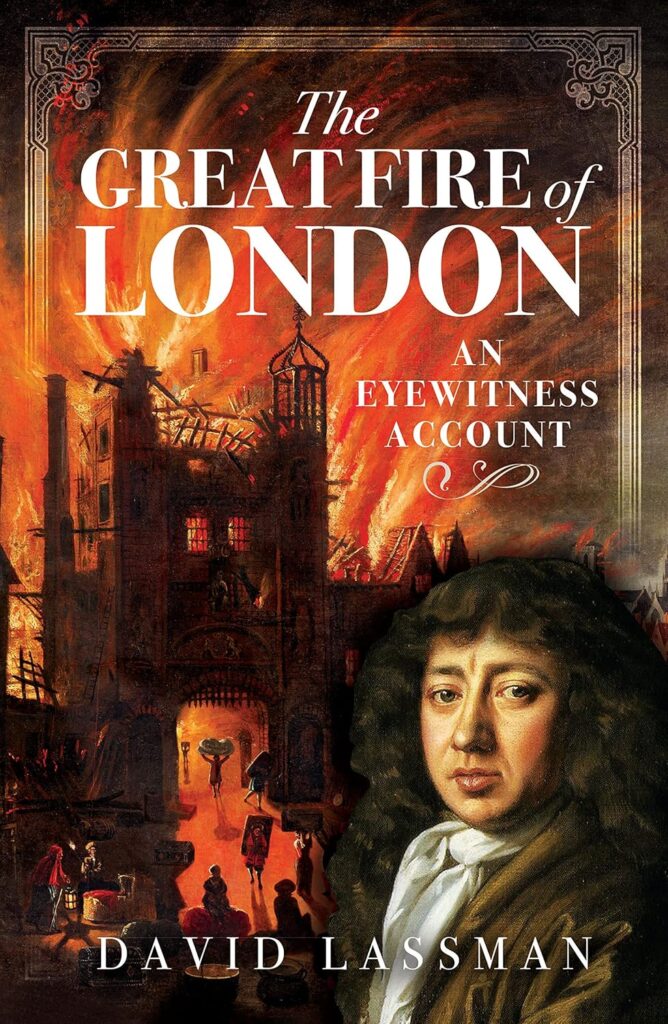
David Lassman is an historian and author of several non-fiction books, as well as co-creator/author of The Regency Detective series of novels. The Great Fire of London is his latest publication, and he is currently working on a book about the Great Plague of London. The seventeenth century is one of his favourite historical periods.
You can purchase The Great Fire of London from the publisher, Pen & Sword History, Amazon (Affiliate link), or by ordering from your preferred local or online bookseller.
